

Disclaimer: Translated from German. This English version has been translated for meaning and readability and may differ slightly from the original German text.
It was March 2017. The snow was heavy and wet, and visibility was poor. For Jakob Schneider and Johannes Weckerle – development engineers and passionate snowboarders – the day on the mountain was over. As so often, they found themselves thinking: Snowboarding makes you tired, you get wet and exhausted – noticeably more so than skiers.
As they shouldered their boards, they watched a skier effortlessly step back into his bindings: hook in at the front, step down at the back, done. One thought wouldn't leave them: Why shouldn't the same principle work with soft boots for snowboarding?
At the time, the snowboard industry largely believed that click-in systems only worked with specially designed boots featuring integrated locking and stiffening elements. This limited both boot choice and riding feel. Rear-entry bindings offered a different approach, but some riders considered them less direct and precise, as well as uncomfortable.
The Community as the Starting Point
Before developing a specific solution, Jakob and Johannes surveyed more than 100 active snowboarders. The result was clear: There was strong demand for a new and better binding.
Based on the feedback, they developed several concepts – one of which would eventually become the foundation of the CLEW system.
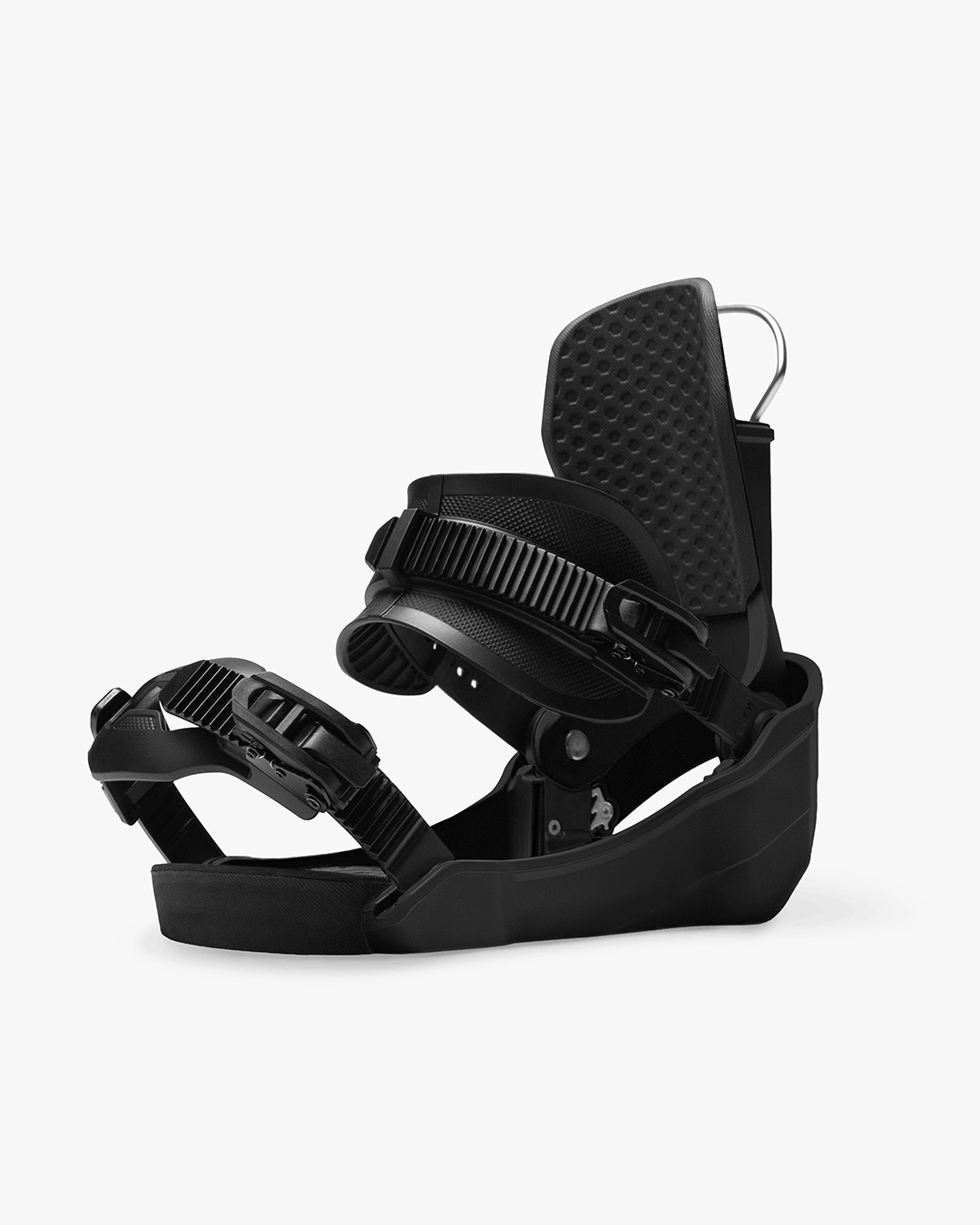
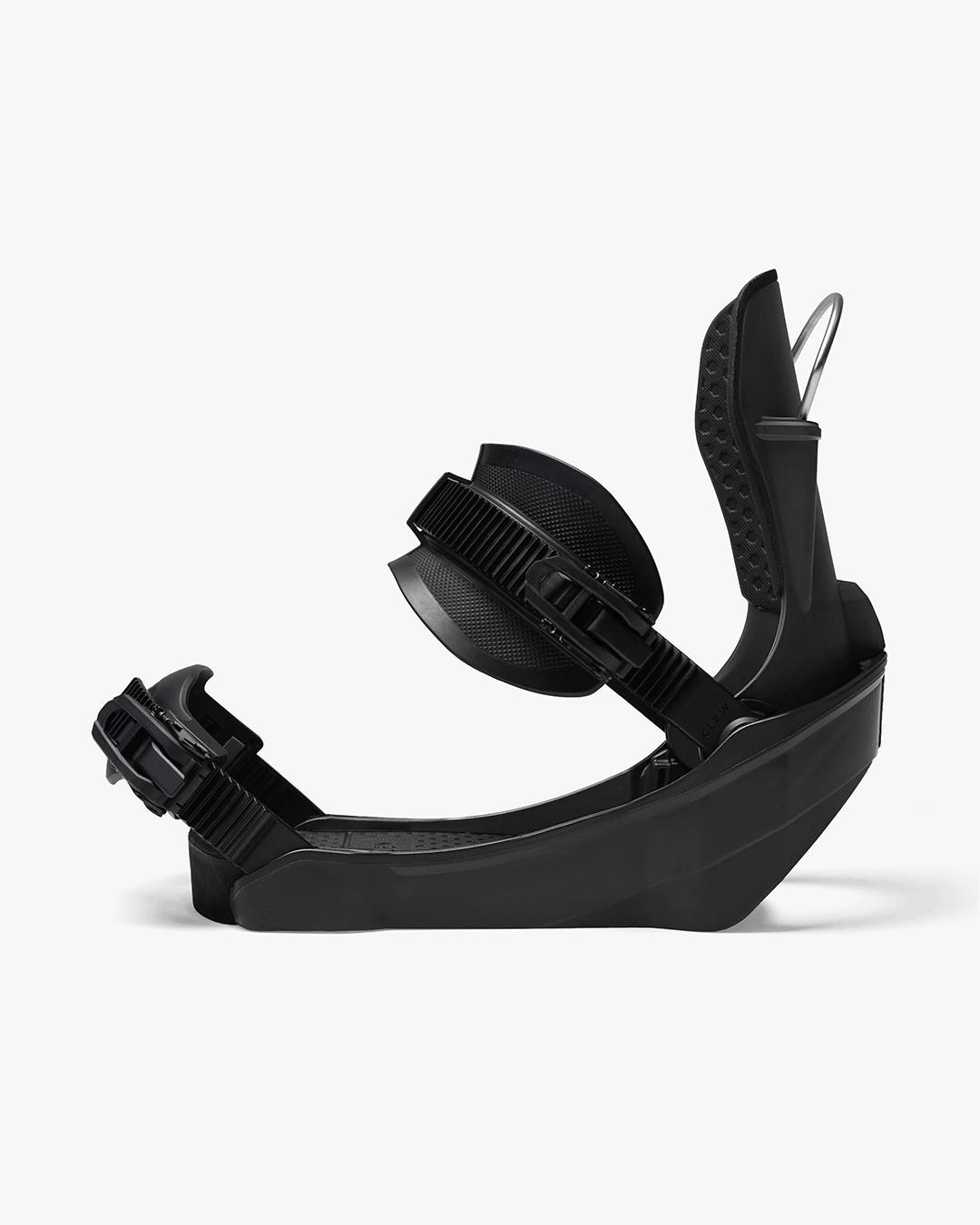
The key innovation was that part of a conventional ratchet binding could be detached from the baseplate system and worn directly on the boot while riding the chairlift. Initial tests with a simple prototype quickly showed that the small heel element underneath the sole barely interfered with walking.
In fact, the Highback attached to the boot even made carrying and grabbing the board easier – an unexpected but welcome side effect.
From the very beginning, CLEW has been aimed at snowboarders who value maximum performance on groomed slopes, in deep snow and while carving. As the brand's latest promotional videos show, the binding now also performs very well in snowparks and halfpipes.
After filing their patent application, the inventors approached established manufacturers. For weeks, they pitched their idea – but no brand was willing to invest in its development.
Do It Yourself
Instead of giving up, Jakob and Johannes founded their own company together with Matthias Albrecht and Jan Mewis and secured the CLEW brand.
The following months were marked by excitement, setbacks and constant progress. Every new iteration brought improvements, but also new challenges.
Financing remained a constant issue, as did fundamental questions: Which components could be sourced externally without becoming dependent on suppliers? And how could they ensure that the mechanism would remain reliable in ice, cold temperatures and dirt?
Step by step, the founders moved forward. They built their own test rigs, sent prototypes to snowboard instructors and regularly gathered feedback from professional athletes.
By mid-2019, more than ten development stages had been completed before the decisive breakthrough was achieved and the initial icing problem was solved.
That same year, CLEW was given the opportunity to present the company on the German TV show Die Höhle der Löwen (The Lion's Den). The episode aired in October 2019 and generated significant attention – but no investment deal was made. The investors considered the market too small and the valuation too ambitious.
Nevertheless, the founders launched their first small production run in December 2019, financed through their own funds and the sale of 25 percent of the company.
To this day, it remains the company's only financing round.
The market response was overwhelming: CLEW has sold out every winter season since then – despite steadily increasing production volumes and without artificially driving growth.
Made in Germany – By Conviction
From the very beginning, the team was determined that CLEW would be developed and manufactured entirely in Germany.
Design, testing and series production work hand in hand. This allows for rapid adjustments, flexible production volumes and uncompromising quality control.
New ideas can be implemented directly – without lengthy decision-making processes. As the founders put it:
“We implement what we believe is right because we are independent.”
The entire product lifecycle is also taken into consideration. CLEW bindings are designed to be repairable, durable and low-maintenance – even beyond the warranty period.
Replacement parts are affordable and quickly available, while the in-house customer service team often responds on the very same day.
A Deliberately Different Distribution Strategy
CLEW follows an unusual but clear approach when it comes to distribution.
Instead of relying on large online platforms or aggressive discount campaigns, the brand works with around 170 independent snowboard shops – all on the same terms, regardless of their size or order volume.
The philosophy behind this is simple:
“No website can replace honest advice in a shop. Local retailers are the backbone of snowboard culture.”
This approach has received strong support within the community because it strengthens the scene rather than focusing solely on sales.
Clearly Positioned
In its marketing, CLEW combines traditional measures with long-term partnerships, including collaborations with well-known personalities such as Kevin Pearce.
On his YouTube channel, SnowboardProCamp, he takes millions of viewers along on his journeys around the world – spending more than 150 days on a snowboard each year, always riding with CLEW bindings.
The brand remains equally consistent in terms of product philosophy: While many competitors focus heavily on the park segment, CLEW emphasizes direct power transfer, stability and control.
The binding is deliberately constructed to be somewhat stiffer and avoids excessive damping in order to provide a precise riding feel – particularly when carving and riding demanding terrain.
The design is also a statement. Instead of playful surfaces, flashy material combinations or elaborate finishes, CLEW uses a reduced, clean design language.
It polarizes – and that is exactly the point.
There are no compromises when it comes to materials and manufacturing. CLEW uses only high-performance polymers with fiber-reinforced components. The raw material alone costs significantly more than comparable plastics produced in Asia.
On top of that come strict quality and environmental requirements as well as high German manufacturing standards. From the team's perspective, all of this justifies the brand's positioning in the premium segment.
“We could achieve higher margins if we outsourced production – but our passion lies in being deeply involved in the processes ourselves and constantly improving them.”
Conclusion: Stay Independent
CLEW demonstrates what is possible when technical expertise, close community ties and genuine manufacturing depth come together.
The Independence 1.0 embodies this philosophy: progress without compromise, comfort without being locked into a specific system, and performance without unnecessary gimmicks.