


Engineering Performance: High-Performance Snowboard Bindings “Made in Germany”
How material innovation defines our bindings
A snowboard binding is a highly stressed system of components. During a turn, significant forces act on the system of rider, binding, and board within fractions of a second. Whether during takeoff, landing, or riding through hard, uneven snow, these forces must be precisely transferred, controlled, absorbed, and released. This is exactly where it’s decided whether a binding feels precise, stable, and controlled. The foundation for that performance is built long before a binding ever touches the mountain: in material development.
Performance starts at the material level
In developing our bindings, we focus on two key mechanical properties: strength and toughness. Strength defines a material’s ability to withstand and transfer high forces. It is critical for direct power transmission from the rider to the board. Toughness, on the other hand, describes how well a material can absorb energy without failing in a brittle way. It plays a major role in defining the flex of a binding and its ability to handle dynamic loads over time.
Johannes Weckerle | Founder
"The challenge is finding the precise balance between these properties."
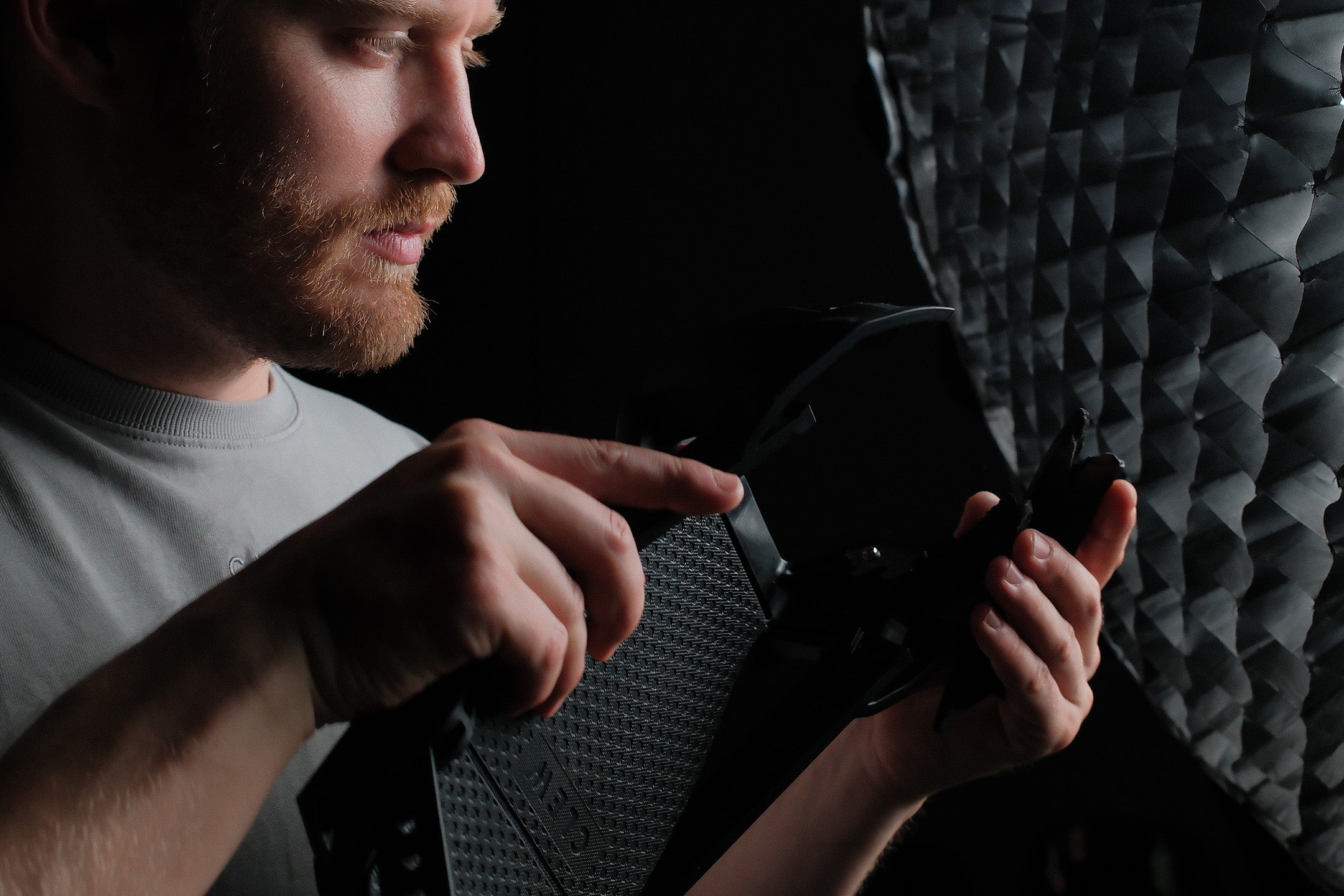
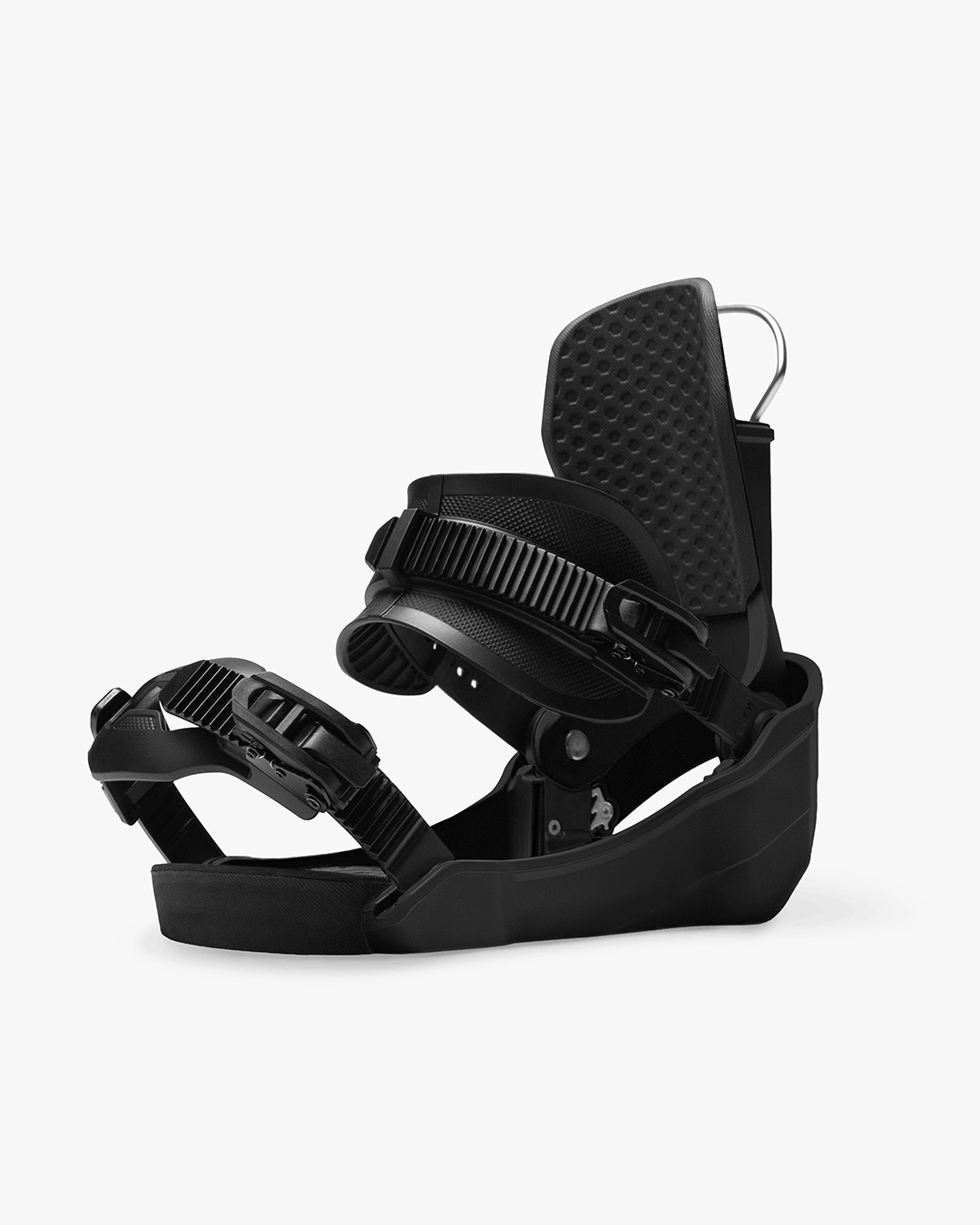
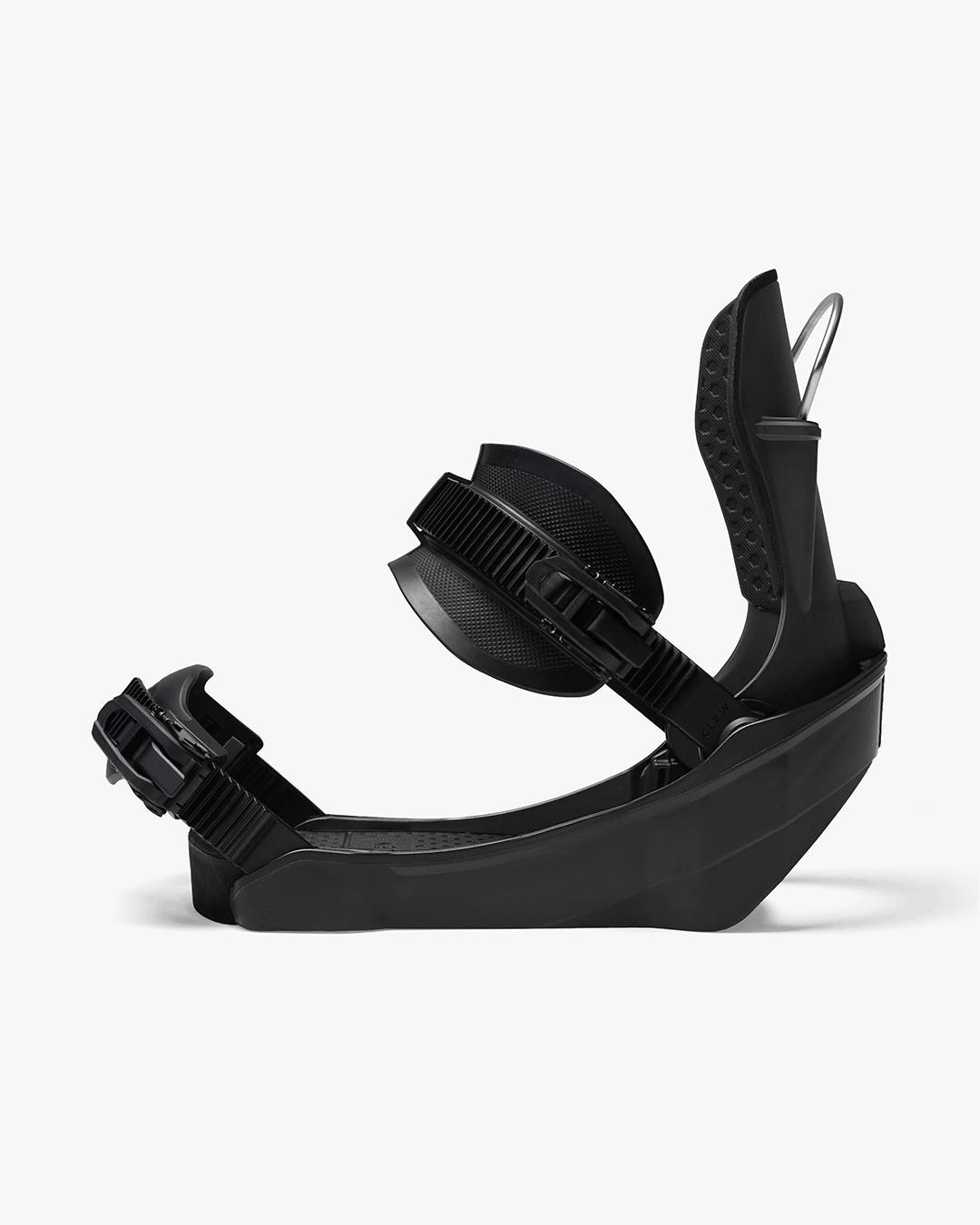
That’s why our current bindings are built using glass fiber–reinforced, impact-modified high-performance polymers. These materials offer a combination of low weight, high structural stability, and controlled flexibility. They allow for precise force transfer while also absorbing peak loads. There is no single universal material for the entire binding. Each component has its own requirements: some must deliver maximum stiffness, while others are designed to allow controlled flex or dampen vibrations. That’s why we carefully select each material based on its specific function within the system.


Material science meets precision manufacturing
Material properties alone don’t define performance—it’s also about how those materials are processed. Our plastic components are produced using injection molding, ensuring consistent geometry and reliable mechanical properties. This allows us to precisely control wall thicknesses, reinforcement structures, and flex zones. For highly stressed metal components, we use sintered steels. In this process, metal powders are compacted under pressure and heat to form precise parts. It enables a highly controlled material structure and exceptionally smooth surfaces. One example is the ratchet teeth of the binding. They are made from high-strength, sintered, and zinc-coated steel. The resulting surface quality ensures a precise yet smooth engagement mechanism. Even seemingly small components like screws are engineered for performance. Rolled threads significantly increase strength compared to cut threads and improve durability under repeated stress.

Why material data alone isn’t enough
In materials engineering, datasheets provide key metrics such as tensile strength, modulus of elasticity, and impact resistance. But real-world conditions on the mountain are far more complex than any lab setup. During development, we tested materials that appeared superior on paper—but under realistic test conditions, they failed earlier than others. The reason often lies in the interaction of multiple factors: temperature behavior, dynamic loads, component geometry, and material fatigue. That’s why we combine material analysis with extensive testing. Our bindings undergo cyclic load testing on specialized rigs. To simulate real winter conditions, they are pre-conditioned for 24 hours at −30°C (−22°F) before testing even begins. This combination of simulation, lab testing, and on-snow validation is essential to truly understand how a material performs in a complete system.
Development between engineering and rider feedback
Technical data is essential—but it doesn’t fully define how a binding rides. That’s why rider feedback is directly integrated into our development process. Through ongoing discussions with test riders, we continuously evaluate what a binding needs to deliver in real-world use: How responsive should it feel? How much flex is ideal? How much damping is needed for landings? This feedback helps us fine-tune the balance between stiffness, flex, and damping. The result is a material setup that not only performs technically but also feels right on the mountain.

Made in Germany as a development advantage
Technologies like injection molding, sintering, and thread rolling are available worldwide. The advantage of manufacturing in Germany lies in production quality, strict standards, and close collaboration with our partners. The proximity between development and manufacturing allows for rapid feedback loops. Design adjustments can be implemented, tested, and refined quickly. For a product that must perform reliably under extreme stress, this tight integration between engineering and production is a key factor.
Sustainability through durability
Many of the plastics we use are technically recyclable. However, reprocessing materials reduces their structural strength. For highly stressed components like snowboard bindings, that’s a critical limitation. That’s why we focus on durability and robust construction. A product that performs reliably over many years reduces resource consumption more effectively than one with a short lifespan. Additionally, manufacturing in Europe ensures that all processes meet strict environmental and quality standards.


Innovation starts in the details
Material innovation rarely happens in big, flashy breakthroughs. It’s the result of countless small decisions: selecting the right material, refining a component geometry, running one more test. That’s where performance is built. When a binding responds precisely, absorbs loads in a controlled way, and performs reliably over multiple seasons, it’s the result of that work—at the material level, in engineering, and in manufacturing. Or put simply: Performance starts long before the first run.
Read more

Alex van Klaveren is a seasoned snowboard instructor with a strong focus on carving and technique. He has years of experience teaching riders of all levels while also pushing his own riding in perf...

1. Can you describe a moment on the mountain when you had to respond to an emergency and the adrenaline really hit you? What was going through your mind as you raced to help?" In Ontario, most ski ...