

Frequently asked questions
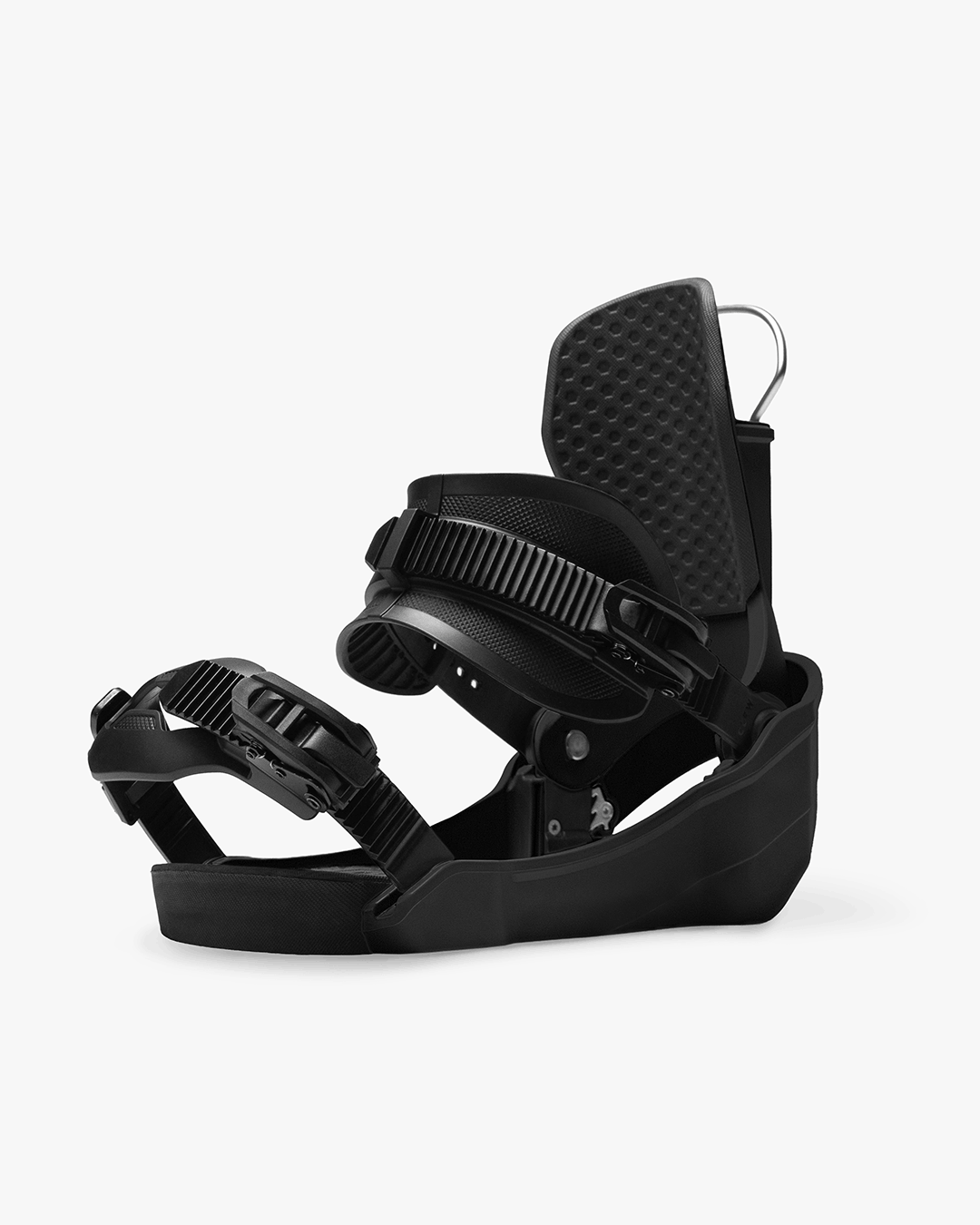
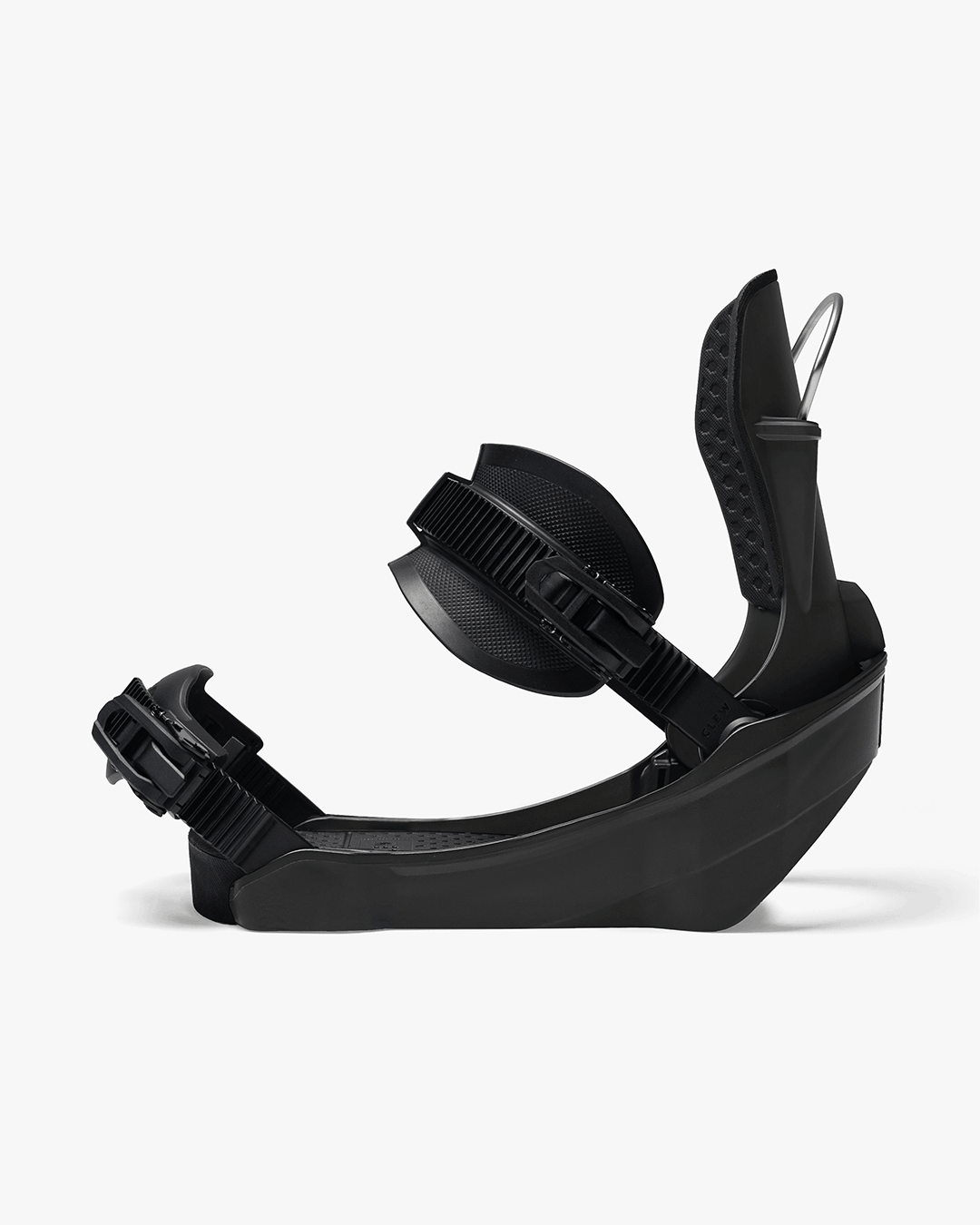
CLEW is a snowboard brand based in Munich, Germany. Our patented binding system combines the construction of a traditional binding with two adjustable straps and a mechanism that lets you step in and out without opening the ratchets.
The Independence is our fourth model generation, developed through years of prototyping, testing and rider feedback. Our bindings are manufactured and assembled in Weilheim, Bavaria.
Keeping development, testing, quality control and production closely connected allows us to investigate feedback directly and improve individual components and manufacturing processes.
The system separates the binding into two parts: the Highback unit stays attached to the boot, while the Baseplate remains on the board. You step in, the system locks — no sitting down, no ratcheting. CLEW bindings are manufactured in Germany, while CLEW snowboards are produced in Austria.
Freedom was CLEW’s third model generation. Independence is the fourth, with changes to the locking system, geometry, materials and adjustment features.
The mechanism uses three locking teeth instead of two and revised geometry to guide entry. Other changes include a new heelcup, a redesigned sole with a different thickness and material composition, a new ankle strap closure and a redesigned toe cap.
Freedom and Independence components are not interchangeable. Each generation’s highback and base form a matched mechanical connection. Replacement parts, discs and additional board bases must match your model.
The Independence is designed to feel supportive and direct. That does not mean it has no damping. Stiffness, elastic compliance and damping describe different mechanical properties.
Stiffness describes how strongly a component resists deformation under load. A relatively stiff structure limits movement between your boot and board, helping your input reach the edge with less structural deflection.
Elastic compliance describes how a component yields under load and returns toward its original shape. The heel area uses a polymer reinforced with long fibers. Its material and geometry allow controlled deflection under harder impacts, helping spread the load over a longer displacement.
Damping describes the dissipation of movement energy. The Independence uses specifically positioned EVA pads. EVA has a cellular structure that compresses under load and a viscoelastic response: some energy is returned as it rebounds, while some is dissipated through internal losses. This helps reduce vibration and soften the sharpness of impacts.
The heel structure and EVA pads therefore contribute in different ways. Structural deflection can soften the load response, while the EVA provides cushioning and energy dissipation.
Adding thicker or softer padding also changes how much movement occurs between boot and board. Our approach is to place damping where it helps manage impacts while retaining a precise connection.
The final result depends on the complete setup. Boot sole construction, boot stiffness, board flex, rider weight and landing technique all influence the forces you feel.
Yes. The Independence is designed for jumps, rails, side hits and butters, as well as riding piste and powder.
It uses the familiar construction of a traditional binding: a highback, heelcup, ankle strap and toe cap. These components provide support and transfer your movements to the board, while the entry mechanism lets you get in and out without opening the straps.
Its relatively firm construction delivers direct response. Strategically placed EVA pads reduce vibrations and harsh impacts, while the construction reinforced with long fibers in the heel area can flex slightly under harder loads to absorb some impact energy.
FIS World Cup riders Kristian Salac and Pedro Pizarro ride CLEW, as does rail and streetstyle pro Joewen Frijns.
If you prefer a supportive, responsive binding, the Independence suits that riding style. If you prefer a very soft, loose setup for jibbing, we recommend testing it first to see whether the flex matches your preferences.
The Step-in systems of the 1990s failed for three main reasons: icing, insufficient power transmission and a lack of adjustability.
The CLEW Independence addresses all three. The mechanism works down to −30 °C, the binding features 2.5° Performance Canting and fully adjustable Ankle and Toe Straps with tool-free fine adjustment.
The fundamental difference is structural: The systems of the 1990s attempted to connect the binding and boot through rigid cleats, sacrificing flex and adjustability in the process.
CLEW retains the strap architecture of a classic binding — you get the same hold and adjustability, but without constantly opening and closing the ratchets.
Material technology is another key factor. The Independence uses specially developed high-performance plastics reinforced with ultra-thin long glass fibers.
The result: more than 20% lighter than the first CLEW model from 2019, 11% lighter than the Freedom 1.0, and up to 15% stronger in the most heavily loaded areas than its predecessor.
We don’t want to talk down
other brands or give you a biased take. So we’ll let the experts speak. They
know the different systems, have ridden them, and have formed their own
opinions.
Read the comparison in German at Surfshop Laupheim
Yes. We support riders, snowboard films and projects that contribute to the scene.
This includes supporting young snowboarders through Snowboard Germany, supporting POW Germany and helping film crews bring projects to life. We also offer dedicated programs for instructors, ski patrols and snowpark shapers.
Independent snowboard shops are another part of that commitment. We work with + 170 local retailers and allow orders without a minimum quantity, so smaller shops can stock CLEW without committing to more inventory than they need.
CLEW works with almost all standard snowboard soft boots — including Burton, Nitro, Deeluxe, ThirtyTwo, Salomon, Vans, Adidas, Ride, K2 and others. There is no dedicated CLEW boot and no requirement to use a specific boot brand. What matters is not the manufacturer, but whether the boot — particularly the heel area — has suitable dimensions.
Not sure? The best option is to check our Size Guide on the binding product page and compare the specified external dimensions with your own boot. Size Guide
Yes. The Independence is a unisex binding. Compatibility depends on the boot’s external dimensions rather than whether it is marketed for women or men.
Check sole length, width and heel dimensions against our Size Guide. Boots with the same stated size can differ considerably between brands and models.
For a fit check, send our support team your boot brand, model, size and sizing system, together with the relevant measurements.
The Independence is compatible with 4×4, 4×2 and Channel mounting systems. The appropriate universal discs are included.
For older boards with a 3D mounting pattern, you need the separately available 3D Mounting Set. The Independence is not designed for splitboard touring interfaces.
Always use the discs, screws and mounting instructions specified for your binding generation. If you are unsure about compatibility, send our support team a photo of your board’s mounting pattern.
No. Once you have adjusted the binding to your boot, the ankle strap stays closed when you step out. The toe cap remains on the board, ready for your next entry.
The buckle locking function helps keep your settings in position. This is especially useful if you accidentally step on the toe cap while your rear foot is detached.
With practice, you can step in while standing, without sitting down, tightening the straps again or folding the highback up.
Yes. When you release your rear foot, the highback unit and closed ankle strap stay attached to your boot. The base and toe cap remain on the board. Your front foot stays connected during normal chairlift and surface lift use.
The removable unit weighs approximately 431 g per foot in size M. Its sole uses a grippy, abrasion resistant material of the same type used for snowboard boot soles. For longer walks, particularly on asphalt, you can remove the unit to reduce wear.
Keeping the highback on your boot means it does not need to fold behind the board or be raised before your next entry. Less weight also hangs from the board, which can reduce the twisting load on your strapped foot during lift rides.
Yes. The CLEW Independence locks via an exceptionally robust Step-in mechanism and only opens when deliberately released using the pull handle located at calf height.
The precise fit around the boot is created by the Ankle and Toe Straps — the same architecture used in a classic strap binding.
The system has been on the market since 2019, is used by more than 100,000 riders worldwide and has gone through more than 40 development stages.
The concern comes from the 1990s, when early Step-in systems were indeed unreliable. The difference lies in the construction: CLEW does not lock the boot to the binding via rigid cleats. Instead, it retains the strap-based construction.
For the lift ride, the Highback can be separated from the Baseplate using a slim, ice-resistant mechanism and remains comfortably attached to the boot until you step back in.
When fully and correctly engaged, the Independence is designed to remain locked under riding loads.
The three sintered metal locking teeth connect the removable highback unit to the base. Their geometry causes pulling forces to draw the connection together. This also explains why pulling your boot upward before releasing the mechanism makes it harder to open: you are loading the connection.
Release requires unloading the connection and deliberately pulling the handle upward. Pressing down on the handle does not unlock it. Always confirm correct engagement before riding.
No. CLEW bindings do not freeze up. The mechanism is designed to work reliably in ice, powder and temperatures down to −30 °C.
Icing was the biggest technical problem with Step-in systems in the 1990s and one of the reasons those systems disappeared from the market. Solving this problem took the CLEW development team more than ten prototypes between 2017 and 2019.
The icing problem occurs when snow or water enters the mechanical components, melts and then freezes again. The redesigned Step-in mechanism of the Independence is constructed so that there are no areas within the mechanism where direct surface contact can cause compressed snow to accumulate or ice to form.
In addition, the spring-loaded locking hooks are protected by a special housing grease, similar to the protection used in alpine ski bindings.
In short: Snow entering the mechanism cannot block the locking system, and ice formation is prevented in the critical areas.
What you should still do: Knock off large chunks of snow and ice before stepping in. This applies to every binding, including conventional strap bindings.
The Independence retains the load bearing components of a traditional binding: base, heelcup, highback, ankle strap and toe cap.
During a toeside turn, the ankle strap restrains the boot while the boot loads the footbed and base. During a heelside turn, the boot applies force to the highback and supporting structure. The locked connection transfers loads between the removable highback unit and the base.
The construction is deliberately supportive and responsive. Integrated 2.5° inward base canting angles the footbed to support a natural stance.
The entry mechanism changes how you enter and leave the binding while preserving the familiar adjustment of a setup with two straps.
Yes. CLEW works with instructors, coaches, ski patrols and riders who spend 100 to 150 days on snow per season.
Their feedback covers repeated entry and release, boot fit, strap adjustment, component wear and performance across changing snow conditions. This complements development testing by showing how the binding behaves during everyday use.
The team also includes FIS World Cup riders Kristian Salac and Pedro Pizarro, alongside rail and streetstyle pro Joewen Frijns.
Professional use is relevant, but your own boot fit and preferred binding response remain important when choosing a setup.
We work with one of the world’s largest chemical and material manufacturers to select material formulations for the demands of our binding. Our polymers are sourced in Germany, tested here and processed into components here.
Each component requires a different balance of stiffness, flexibility, impact resistance and durability. We select the material formulation and design the component geometry together.
The base uses PA6 I GF30, an impact modified polyamide reinforced with 30% glass fiber. The reinforcement provides stiffness, while the impact modification helps the component withstand sudden loading in cold conditions.
The sole uses a different polymer reinforced with long fibers. Its construction provides support while allowing controlled deformation under harder impacts. The highback deliberately uses an impact modified material without glass fiber reinforcement to retain its intended flexibility.
The straps use TPU for flexible support around the boot. EVA pads provide targeted cushioning and damping. The locking teeth are manufactured by GKN from sintered metal, combining precise dimensions with properties suited to repeated mechanical loading.
Our development team investigates up to 20 different materials each year. Evaluation includes material and component testing, complete binding testing and feedback from riders using the equipment throughout the season.
The finished component matters as much as the raw material. Its formulation, geometry, processing and interaction with the rest of the binding determine how it performs. Keeping sourcing, testing and production closely connected in Germany gives us direct control over that development process.
CLEW is available through independent. snowboard retailers. Use the retaile finder on our website and contact the shop to confirm stock, sizes and testing options.
A retailer can check the external dimensions of your boot against the binding size, position the ankle strap and toe cap, and adjust the footbed and forward lean. Correct setup determines how the boot sits in the binding and helps ensure unobstructed entry.
The shop can also check board compatibility, select the appropriate mounting hardware and center the binding to balance toe and heel overhang.
The Independence comes with a two year full warranty covering every individual component, according to our warranty terms.
Coverage extends beyond the base and highback. Straps, buckles, locking components and smaller parts are included when they have a covered defect. This is a broader commitment than a warranty limited to selected structural components.
The warranty covers material defects, manufacturing defects and covered damage during normal use. Normal wear, incorrect mounting, misuse, loss and theft are excluded.
Contact support@clew.de with your proof of purchase, a description and clear photos. Because many components are replaceable, a covered issue can often be resolved by supplying the affected part.
Yes. Many components are available individually, including straps and the replaceable sole of the highback unit.
Many repairs can be completed with a suitable screwdriver. Video instructions are available for selected procedures. Our support team can help identify the correct component and determine whether a repair is suitable to carry out yourself.
Support is also available outside Germany. Part availability and delivery times depend on your location and the component required.
Always select parts for your specific model generation. And most spare parts can be replaced at home using a standard screwdriver. For certain repairs — such as replacing the straps — detailed step-by-step video tutorials are available.
This is intentional: We do not build a binding where one small damaged component forces you to buy an entirely new binding.